Friends Are Flowers in the Garden of Life

An Interview with Jennifer Parker

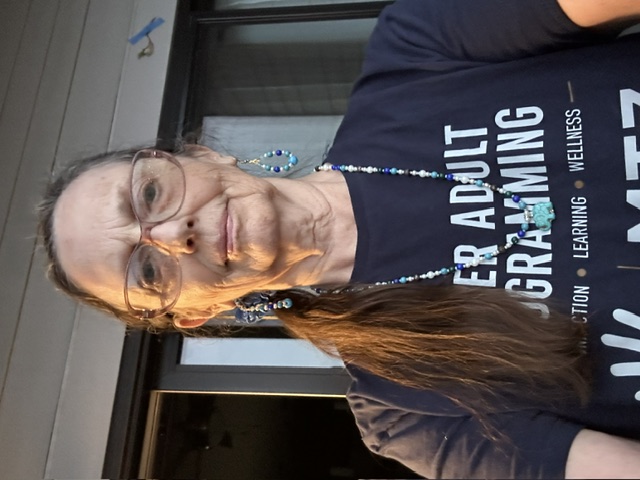
This month, we switched roles, and I had the pleasure of interviewing Jennifer Parker—our gifted storyteller who beautifully weaves together the lives of our congregation, helping us feel more deeply connected. Jennifer is an accomplished and inspiring woman, and I’m confident you’ll enjoy getting to know her a little better.  ~Rev. Debra

What would you like to share with the community about your life?

I began life in a rural community. My parents lived on a farm in northern Kentucky when I was born. Mine was a planned home birth that turned out to be long and difficult. My mother’s sister was there to help, and she told me I was born blue. The doctor said to dip me in cold and warm water to get me to breathe.

I have three siblings, two of whom were severely developmentally challenged. I am amazed that I was okay after a difficult birth, but my sister Cindy and brother Belvierd were disabled. Their needs were a strain on the family, especially my mother, since we were all born within five years and three months. Both Cindy and Belvierd died in their sixties, and I have one sister Julia living near Albuquerque NM with her husband John and son Jesse.

We moved to the nearby small town of Warsaw, Kentucky when I was three, located on the Ohio river between Cincinnati and Louisville.  My father received training to become a plumber through the G.I. bill. My mother was a teacher who eventually pursued a master’s in special education, which I’m sure she felt inspired to do because of her children.

I had a traditional small-town education through both school and church. I attended the Southern Baptist church regularly with my mother and siblings, usually three times a week. I was considered a bookworm by my family because I read everything I could lay my hands on, including my mother’s Readers Digest. I feel grateful that my mother provided subscriptions to book clubs that exposed me to the wider world.

I also had two other pivotal experiences that shaped me. First, in 8th grade there was a shortage of teachers in Kentucky, and two New York teachers were recruited to teach my classes. That introduced me to social and political ideas that were new. Second, a recruiter from Kentucky Southern College came to speak at my church during my junior year. Their description of a multi-disciplinary curriculum inspired me to attend.  

I graduated as Valedictorian in a class of 39 from Gallatin County High School. When I left for college, I also essentially left my hometown because I felt very different from my classmates, who generally never left the community after graduation.

Though Kentucky Southern originated as a Baptist affiliated college in Louisville, Kentucky, the religious classes I took introduced me to more progressive views regarding how the Bible was written. After two years, the college merged with the University of Louisville, and I transferred to a similar college, St. Andrews Presbyterian in Laurinburg, North Carolina.

I graduated in 1971 with a BS in Psychology. A semester before I graduated, I married Bill, the father of my children. After he graduated, Bill pursued a doctorate in Counseling Psychology. We lived in Lawrence and Manhattan, Kansas, Springfield, Missouri, and Bemidji, Minnesota.  I loved being exposed to new places because my family never travelled. We birthed our daughter Emilie in Lawrence and five years later, our son Aaron was born in Bemidji.

While Bill and I espoused more liberal ideas than our parents when we married, I later realized our socialization led to a pretty traditional relationship. After eleven years, my changes led to more conflict in the marriage and we separated. This was a huge heartbreak and crisis for me, but I now recognize it as a blessing because it led to my growth emotionally and spiritually.

A professor friend encouraged me to do a social work practicum to aid my pursuit of a full time job that would use my psychology degree. I was sent to the Northwoods Coalition for Battered Women to work with domestic abuse victims. What I learned there contributed to my growth, because I faced how domination dynamics influenced me in my parents’ home and in my marriage. Added to being exposed to feminism, this began my growth into the person I am now.  While I wouldn’t have chosen this way to grow, I know this is often how it comes about.

The connections I made between domestic abuse and all other forms of oppression influenced my career choice. I decided to become a therapist because I wanted to serve others in empowering themselves. I was especially interested in exploring how cultural beliefs in our society permit sexism, domestic abuse, and all other forms of oppression, so looked for a graduate school that offered me that opportunity.   

I moved to Madison, WI in 1984 and received my MSSW from the University of Wisconsin in 1986. After commuting for four years to a job at Directions Counseling Cetner in Watertown, I worked part-time at UW Adolescent Intervention Program and joined Midwest Center for Human Services, a private practice. In 1991, I developed a group curriculum for victims of partner abuse, called “Women’s Voices,” and worked in coordination with the ATAM abuser treatment program in Midwest Domestic Violence Center, a subgroup of the private practice.   

I moved my practice to Harmonia: Madison Center for Psychotherapy in order to be an independent practitioner with a group of therapists who were wholistic. I continued mental health therapy and the Women’s Voices program throughout the next seventeen years. Julie Tallard Johnson became my writing mentor, and I followed my passion to write a book that shared what I had learned about survivors of abuse and domination systems.

When I published Coercive Relationships: Find the Answers You Seek in 2021, I quickly decided it was time to retire as a therapist to pursue two new passions: marketing my book and presenting workshops to therapists regarding effective therapy for survivors. After five years, I feel I’ve accomplished a lot and am now re-evaluating how much longer this is mine to do. I am trusting Spirit to lead me.

I love to travel and am grateful for all the opportunities I’ve had.  Recent issues with my back have slowed traveling but I hope to continue in some form. I do have my next trip planned in August to Isla Mujeres, an island off the cost of Mexico near Cancun. I can thank my mother for the travel bug, as she also traveled even though her husbands didn’t want to accompany her.  

I am grateful for my children and couldn’t wish for a more loving and wonderful family. Emilie works at UW Madison in Admissions and has one son, 13 year old Gabriel. Aaron and his wife Jill have three sons, Theodore 8, Oliver 7, and Finnegan 1.5 years, and they have a fourth son on the way. Aaron is a school psychologist, and Jill is a psychologist in private practice. They are all busy people but find time for family gatherings. We are blessed.  

What brought you to Unity?

After growing up in the Southern Baptist Church, I attended many denominations over the years. When I came to Madison, I found the First Unitarian Society and felt at home with their values. Afterward graduation, I switched to Prairie Unitarian Society because it was smaller. 

After many years, I felt the need for more spirituality than the UU had to offer.  My long-term friend from graduate school, Katherine Ripp, invited me to Unity. I began attending in March 2000, at the end of Rev. Roger Goodwin’s tenure. Unity offered the same values and principles I cherished but with the addition of spiritual development. I confess that I had to relearn some terms such as God and sin that have different interpretations from my Baptist upbringing. 😊

I have attended regularly ever since. More than once, I’ve told ministers that it felt like Unity principles supported how I sought to empower clients, except in a spiritual context. I consider Unity to be my spiritual home for as long as I am on this earth.

What are your favorite activities at Unity?

My first team was the library team, back in the days when you had to check out books.  During the interim ministry of Rev. Joy Young, I took a prosperity class, and those principles have guided me ever since.

During Joy’s tenure she suggested beginning a Christmas in July event, and I asked if the beneficiary could be Domestic Abuse Intervention Services. I’ve been team leader for twenty-two years.

Since I retired, I discovered that I have more energy for activities. After a short stint on the Board, I joined the Usher and Care teams. When I was on the board, they discussed how important it is to be a welcoming community instead of limiting ourselves to tight circles of friends, and that inspired me to expand my circle.  

During a meditation time, Spirit gave me the bright idea to interview members.  I remembered that Unity had a similar column in the past before the digital age and I loved the express “friends are the flowers in the garden of life.” I really enjoy learning more about who members are, and I’ve heard many others express appreciation as well.

It occurs to me that I should explain the process so you will know what it is like when I ask if you want to be interviewed. I ask where each person wants to meet (it’s frequently at the church) and stick to the questions you see. Everyone tells me what they want to share, and I only inquire to clarify something they’ve said. Sometimes people tell me things they don’t want to be in the article, and that’s fine. Then I send them what I write prior to publication to make sure of accuracy and also to allow everyone to add or delete content. And I take a picture.      

Is there anything you’d like to see Unity do that would make your experience even better?

The church is moving in a direction I support, like having more fun events and social justice activities. I’m also glad that we have so many classes available for our spiritual growth.